
One of the quickets examples of evolution recorded.
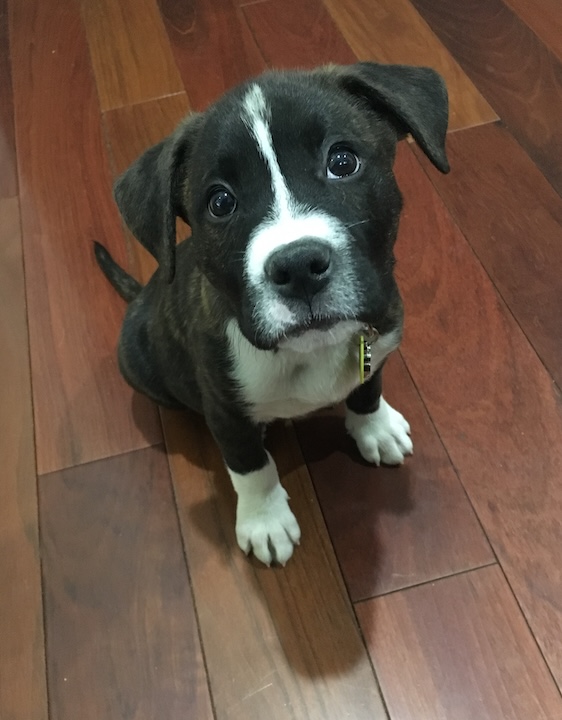
Does your dog have those puppy dog eyes that you just can’t resist? You can thank humans for that! The subconscious selection of dogs for breeding has led to a new muscle responsible for the “puppy dog eyes", the levator anguli oculi medialis (LAOM).
The discovery of the levator anguli oculi medialis (LAOM) is one of the most compelling examples of "accelerated evolution" ever recorded. While most evolutionary changes take millions of years, this specific muscle developed in dogs over a mere 33,000 years—a blink of an eye in biological terms—specifically to facilitate a "conversation" with humans.
In 2019, a groundbreaking paper titled "Evolution of facial muscle anatomy in dogs" was published in the Proceedings of the National Academy of Sciences (PNAS). Led by Dr. Juliane Kaminski at the University of Portsmouth, the research team sought to understand why dogs have such human-like expressions compared to their wild ancestors.
The researchers conducted a dual-phase study:
1. Anatomical Comparison: They performed detailed dissections of both domestic dog cadavers (from various breeds) and wild gray wolves.
2. Behavioral Observation: They recorded the facial movements of shelter dogs and wolves when interacting with a human for two minutes.
The results were stark. Every dog breed studied possessed the LAOM muscle, a thin strip of muscle above the eye. In contrast, the wolves almost entirely lacked it. At most, the wolves had a thin, pale cluster of fibers that could not perform the same movement.
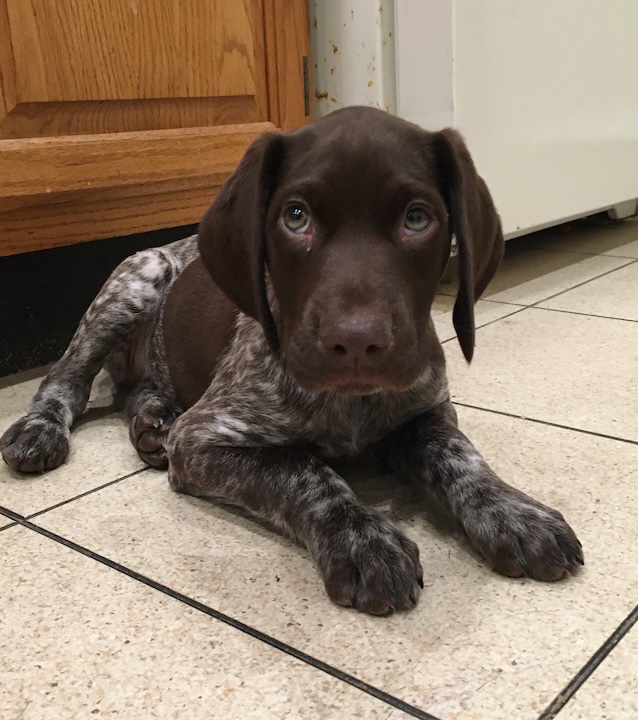
The LAOM muscle performs one specific task: it pulls the inner corner of the eyebrow upward and inward.
This movement is significant for two reasons:
• Paedomorphism: It makes the eyes appear larger and more "infant-like," triggering a mammalian caregiving response in the human brain.
• Human Mimicry: In humans, this specific eyebrow movement is associated with sadness or vulnerability. When a dog does it, we subconsciously project a "soulful" or "sad" emotion onto them, even if the dog is simply curious or hungry.
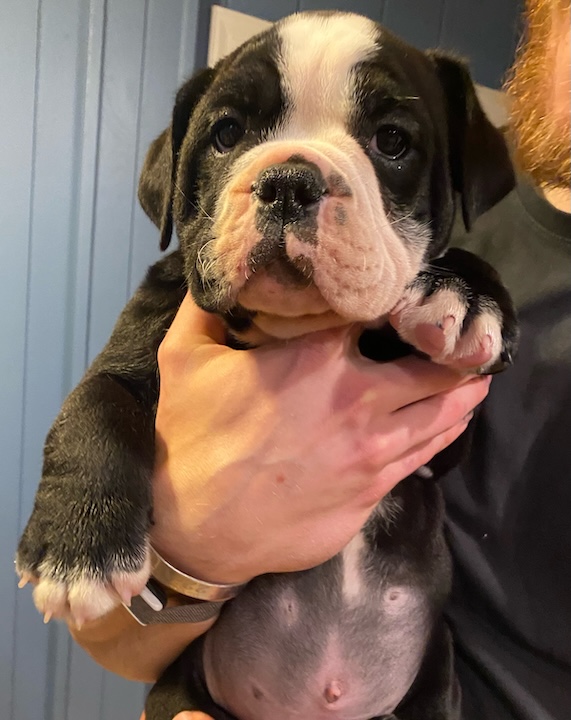
The Siberian Husky Exception: Interestingly, the study found that the Siberian Husky—an ancient breed more closely related to wolves than many others—did not always have the LAOM muscle as well-developed as breeds like the Labrador or Chihuahua. This suggests the muscle became more pronounced as dogs were bred more for companionship than for utility.
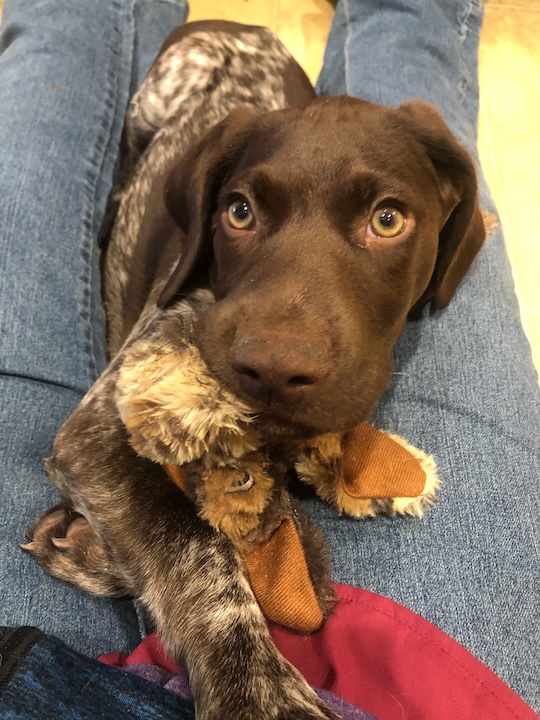
The study concluded that this was not an accident, but a result of selection pressure.
Early humans were more likely to provide food, shelter, and protection to wolves/dogs that exhibited "vulnerable" facial expressions. This created a feedback loop:
1. Dogs with a slight mutation allowing for eyebrow movement got more snacks.
2. Those dogs lived longer and had more puppies.
3. The "eyebrow muscle" gene became a standard feature of the species. The "Paired" Muscle: RAOL
The research also identified a second muscle, the retractor anguli oculi lateralis (RAOL), which pulls the outer corners of the eyelids toward the ears. While this muscle was also more developed in dogs than wolves, it wasn't as universal as the LAOM. The RAOL is what gives some dogs that "smiling" or "squinting" look when they are excited to see their owners.
Before this study, scientists knew dogs were attuned to human gestures, but this proved that human preference actually physically reshaped the canine face. It moved the conversation from "dogs are smart" to "dogs have been biologically engineered by our subconscious desires.”