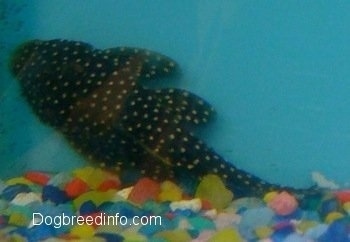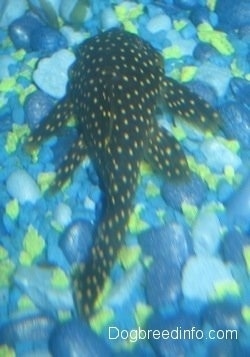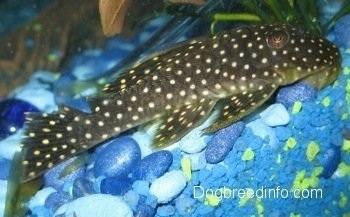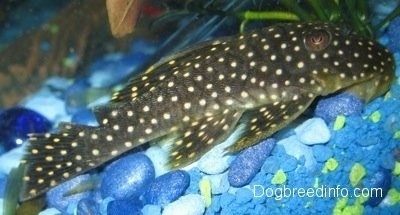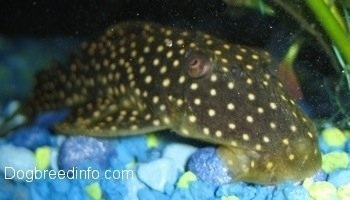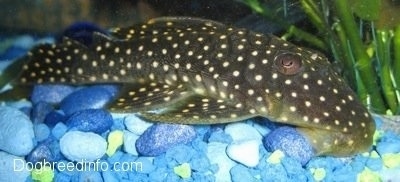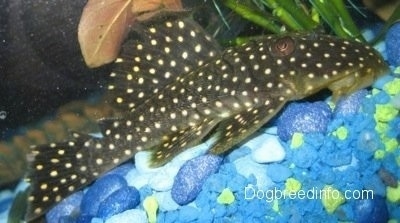
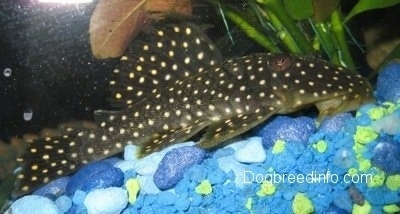
Baryancistrus sp., L177, L081, L018/85
Plecostomus, Catfish
Loricariidae
Hypostominae
Golden Nugget Pleco
L177, L081 (Orange Seam Pleco), L018/85. These numbers are sub-categories divided into three different types found in the Xingu river in the Amazon rainforest. The L numbers will be used until a scientific name is given. L081 has smaller yellow spots; L018/85 has medium yellow spots; and L177 has larger spots.
55-gallon
Bottom dweller
Medium
For the most part peaceful, so long as you provide places to hide. Nocturnal. They are highly territorial with other Golden Nuggets if you do not provide ample space and hiding places. Can get aggressive toward other smaller fish and may try and eat them when they are adult size.
Does well with almost any other fish that live in the same water type.
25 years
8 inches, they grow slowly
Needs places to hide or it may become aggressive with other bottom dwellers, as it can become territorial. Nocturnal, need to provide caves and bogwood as a retreat for the fish during daylight hours.
Freshwater
6.5 - 7.5
dGH0
75° - 82° F (24 - 28° C)
Will graze on algae and chew on bogwood to supplement its diet with fiber. Also eats meaty foods like bloodworms, granules, vegetables, tablets, algae wafers and vitamin-rich food. Will not usually eat algae from the glass. Usually do not eat plants. Will eat most food leftover from other fish. Feed right before you turn out the lights.
Hard to tell when young. When full grown, males are usually larger.
Spawning catfish. Very difficult to breed. This pleco is a cave breeder and requires a current of water flowing into a cave in order to breed.
South American lakes and rivers
Golden Nuggets are susceptible to fungus and bacterial infections, which cultivate in the gravel and sand bed. Regular vacuuming of the substrate is necessary.