
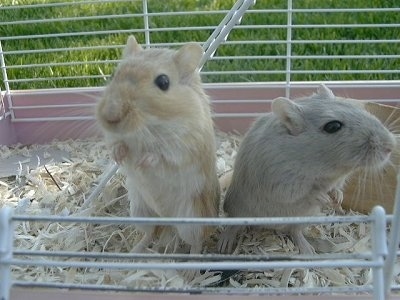
Gerbils—Itchy and Scratchy
Warm-blooded mammal in the rodent family. Diurnal, they are up during the day and sleep at night.
Gerbils are naturally friendly, curious, very sociable, athletic, active, bold and entertaining to watch. They can take a lot of handling and like to gnaw cardboard and dig tunnels. They are one of the few rodents that are awake during the day and sleep at night. The more you handle your gerbil, the friendlier and tamer it will be. Gerbils that are not handled enough will become less tame. When picking up your gerbil approach it slowly so you do not startle it. Being careful not to squeeze, curl one hand over its body, with your fingers and thumb around its abdomen, holding it securely. Place the other hand under its legs while you are carrying it. Gerbils that are gently handled often from a young age will rarely bite. It is best to get your gerbil from a breeder who has handled it from birth. Happy gerbils often "sing," making noises like small birds chirping. Gerbils will be happiest if kept in pairs; they do not like to be alone. Lone gerbils have been found to live shorter lives and tend to be harder to tame and less friendly overall. Gerbils do not like to sleep or eat alone and they thoroughly enjoy having another gerbil groom them. If gerbils are housed together at a young age, they will usually get along well regardless of their sex. However if you do not want a litter of gerbils to tend with, be sure you are housing the same sex together. Gerbils tend to choose one mate for life, and will be aggressive toward newcomers if introduced too quickly. It is best to get two gerbils at the same time that are about 5-8 weeks of age. If you get two adults you will have to use the Split Cage Method to introduce them to avoid fights. The Split Cage Method is when you put a divider into the cage allowing the gerbils to see each other, but not fight. Two to three times a day switch the sides the gerbils are on, allowing them to get used to each other’s sent. Females may bat at the divider the first day or two; this is normal. Do this for about 10 days then try introducing them in neutral territory. If after a half hour of running around with no fights occurring, clean out their cage to rid it from each other’s sent and try putting them together in the same cage. Watch them for about 3 more hours to ensure they are getting along. Look out for bites near the tail or rump; this is a sign of trouble erupting. This method will not usually work when trying to introduce already established groups. It is only recommended for introducing a single gerbil to another. Females do best in groups of no larger than two, while males tend to be a little more tolerant of each other in groups of three or more. For the average gerbil owner it is recommended to only have two gerbils together, as sudden fights can occur within a group of either gender.
A gerbil's size is halfway between a rat and a mouse, about 2-4 oz.
A fish aquarium tank with a tight-fitting wire mesh lid is the recommended housing for gerbils. For two gerbils you should have at least a 10-20 gallon tank. For three or more gerbils at least a 20-30 gallon tank should be used. Keep in mind that gerbils can jump, so a tight wire lid is essential. Wire mesh cages and plastic Habitrail homes can also be used, however they are not the preferred housing. Plastic Habitrail homes do not have enough ventilation, will get chewed fairly quickly and tend to get smelly. You may not want to choose a wire cage as a gerbil will kick bedding out between the bars of a wire cage, making a daily mess. If you do choose a wire cage, the cage floors should be solid and should be at least 24 inches long by 14 inches wide by 12 inches high. The wire in the mesh cages should be no more than a centimeter apart to prevent the gerbil from escaping. Gerbils can squeeze through very small spaces and are great jumpers. A secure top is essential. A gerbil's cage should not be kept in direct sunlight or heat. They should be placed in a quiet, dimly lit place. The bottom of the tank or cage should be lined with newspaper. Aspen, carefresh or corncob bedding should be placed on top of the newspaper lining to absorb their droppings. Hay, shredded newspaper, paper bags, paper towels, or toilet paper can be put into the cage for the gerbil to make a nice nest out of. Cedar and pine shavings can irritate your gerbil's liver and respiratory system and should be avoided. Cloth should also be avoided as they can choke on it. Toys should be provided in the gerbils home to give the gerbil something to chew on and to hide in. For example, empty toilet paper and paper towel roles, wooden houses and toys full of holes. They sell some great gerbil toys at your local pet store. Placing a small cardboard or wooden box in the cage will give it something to hide in and chew on. Wood made just for small animals, found at your local pet store is recommended over just any old piece of wood as it eliminates the risk of giving the gerbil wood that is treated which can be toxic to gerbils. Placing anything with an unknown source into the gerbil’s home is placing them at risk for diseases or mites.
Gerbils tend to eliminate in one area of the cage, keeping the rest of the cage fairly clean. The area where they eliminate should be cleaned every day. The rest of the bedding should be cleaned every 2-3 weeks, depending on how many gerbils you are housing. The more gerbils you have in one unit the more you will have to clean it. Tanks should be allowed to thoroughly dry before new bedding is added and placing all of their toys and nesting material back in.
Gerbils do not need humans to groom them as they groom themselves. Grooming not only keeps them clean, but it is also a part of their social structure. The dominant gerbil will often be seen grooming the submissive gerbil to assert their dominance, especially when two gerbils are first introduced. This behavior will continue throughout their relationship. Like all rodents, a gerbil's front teeth grow constantly. They must chew on things to keep their teeth filed down.
Gerbil food can be found at your local pet store. They can also eat timothy hay, alfalfa hay, unsalted sunflower seeds, unsalted peanuts, Cheerios, Rice Krispies, apples, carrots, lettuce, dried bananas, dried kidney beans, dried lentils, dried lima beans and dried black-eyed peas. Keep in mind that sunflower seeds and peanuts are fatty and should be saved only as occasional treats. Cheerios, Rice Krispies, apples, carrots, and lettuce should also be considered a treat and given only occasionally. Foods that spoil should be removed after one day. A heavy dish that is not easily knocked over should be used. A 2 inch (5 cm.) high ceramic bowl will do nicely. Water should be provided at all times. Water should be given in a gravity driven bottle with a metal spout that hangs on the side. Water should be changed daily.
An exercise wheel can be provided. You can also use an exercise ball. All exercise ball time should be 100% supervised. Some feel wire wheels pose the hazard of gerbil's tails getting caught; hanging the wheel up on the side of the tank will eliminate this risk. Gerbils will greatly enjoy a run outside their tank at least once a week in a gerbil-proofed room, such as a small bathroom with no nooks and crannies for them to escape.
About 1-5 years.
Prone to Tyzzer's disease (mites) which is deadly. A gerbil should be alert, bright eyed, playful, inquisitive with a clean nose. Their coat should be soft and shiny. If your gerbil shows any sign of illness take it to a small animal vet.
Gerbils reach sexual maturity at about 5 weeks of age. The gestation period for gerbils is about 21-26 days. They will usually have an average of 5 babies. Parents can mate again immediately after the birth. Baby gerbils are called pups. Pups are born blind with naked ears. The ears open in about 3 to 7 days. In about 7 to 10 days the coat will start to grow in. The eyes will open in about 14 to 20 days. Weaning occurs by the age of 21 days. A pair of gerbils can produce a new litter every 30 to 40 days, for a total of 6 or 7 litters during their reproductive lives. The female gerbil is reproductively active until she is about 18 months of age. Males may continue to be fertile until they are about 24 months of age.
The common pet gerbil originated in Mongolia.
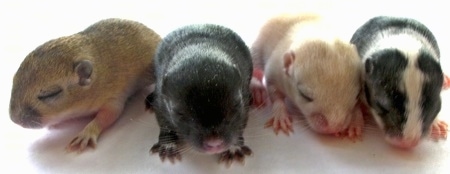
Baby gerbils bred by "Jerbos-Gerbils" gerbilry.
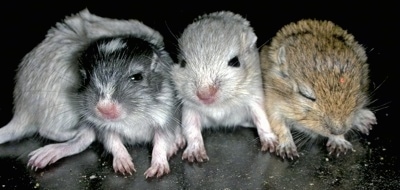
Baby gerbils bred by "Jerbos-Gerbils" gerbilry.
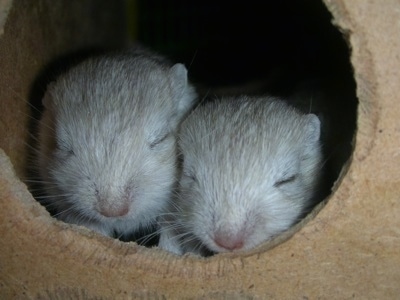
Baby gerbils bred by "Jerbos-Gerbils" gerbilry.
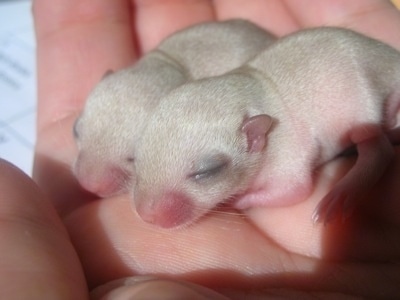
Baby gerbils bred by "Jerbos-Gerbils" gerbilry.
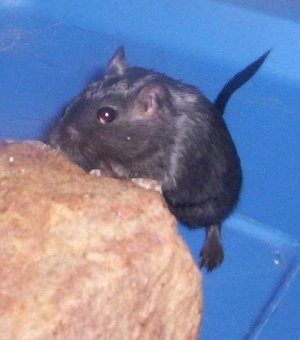
Pono (black)—photo courtesy of 'Little Paws' gerbil breeder.
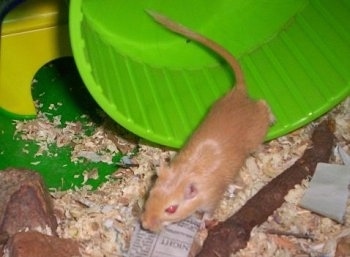
Flame (argente golden)—photo courtesy of 'Little Paws' gerbil breeder.
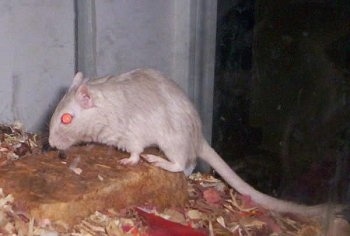
Angel (dove)—photo courtesy of 'Little Paws' gerbil breeder.
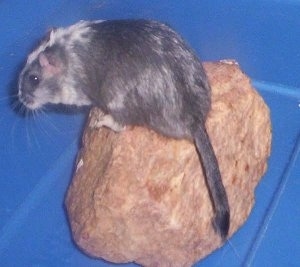
Timmy (slate and white pied)—photo courtesy of 'Little Paws' gerbil breeder.
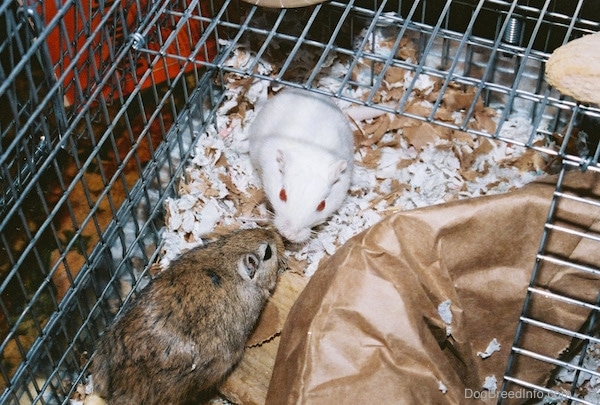
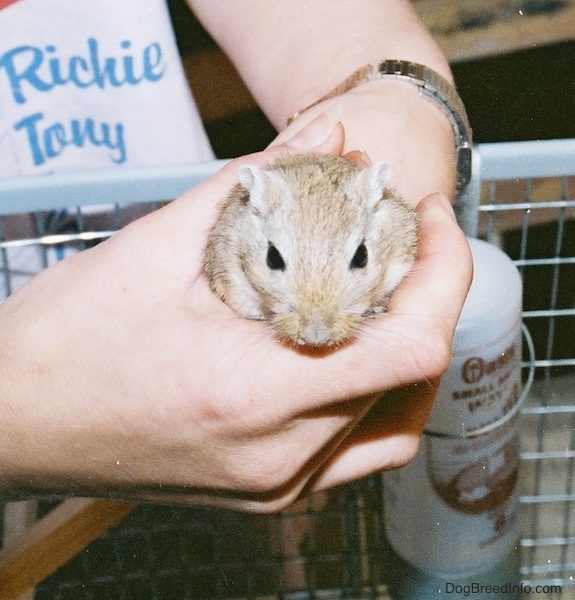
A gerbil being held by a person
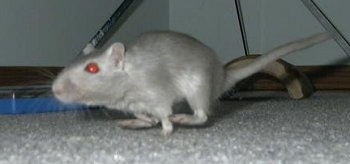
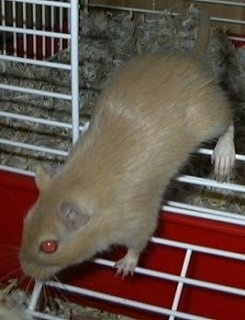
Itchy
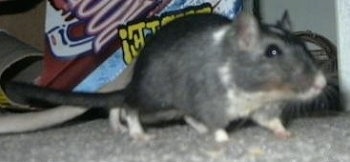
Scratchy
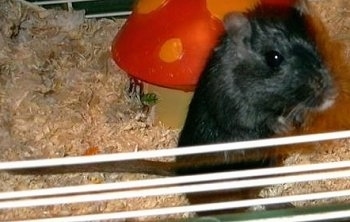
Curly
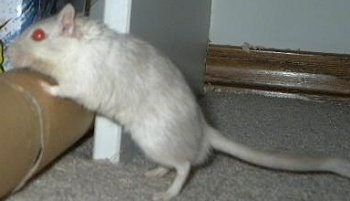
Shadow
Moe