
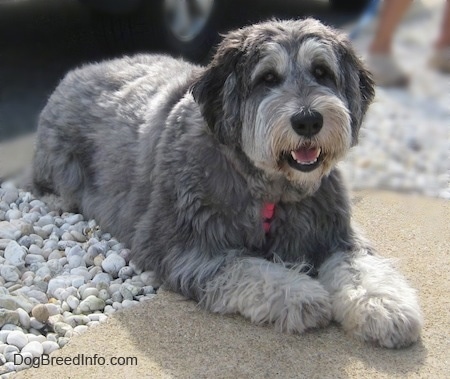
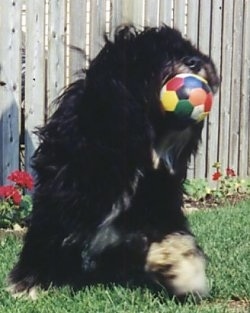
Kya the Polish Lowland Sheepdog at 3 years old
POAL-lish Ov-CHA-rek Nee-ZHEE-nee
The Polish Lowland Sheepdog is a medium sized, shaggy working dog. The head is moderately broad and slightly domed. The drop ears are heart-shaped and set moderately high. The eyes are hazel or brown, but can also be blue, although it is not accepted in the AKC show ring. The nose is dark. The teeth meet in a level bite. The back is level and fairly broad. The loins and thighs are well-muscled and broad. The tail is a natural bobtail or is docked short. The Polish Lowland Sheepdog has a long, wirehaired coat with a soft under-layer. All coat colors are permitted, but white with gray or black, or plain gray are more common. The Polish Lowland Sheepdog has a lot of hair on its forehead, cheeks, chin and legs.
This animated, clever, happy, and alert dog has a good memory. It is obedient, intelligent and affectionate. Somewhat reserved and watchful with strangers, it will announce visitors loudly. The Polish Lowland Sheepdog should be accustomed to people at an early age. Dependable and fairly easy to train, once convinced the handler is a strong minded being that can take care of its "pack," the Polish Lowland Sheepdog will make the owner happy. It learns quickly and is very willing to please; however, it can be willful if it senses it is stronger minded than its owner. This breed is responsive to firm, fair obedience training, but he is also clever, strong-willed, and will think he knows best if you are not properly communicating with him. The Polish Lowland Sheepdog is a serious, responsible dog who could bite if provoked. This sheepdog may nip at people's heels, displaying herding behavior. The Polish Lowland Sheepdog is excellent with children when raised with them from puppyhood and/or properly socialized. This breed can be friendly with other dogs, but will hold their own if another dog tries to knock them out from being the leader. The Polish Lowland Sheepdog will usually do okay with other non-canine pets. As a working dog for many centuries, the Polish Lowland Sheepdog is happiest when it is given a job to do. This breed is lively and clever enough to work sheep alone. This cute, shaggy dog does not grow into a calm, little lap-dog. The Polish Lowland Sheepdog is a curious, muscular, agile dog that is liable to find trouble if left alone without leadership and the proper mental and physical exercise. This breed needs an owner who is firm and consistent. Socialization and training are important. This breed is adaptable and makes a good traveling companion.
Height: 16 - 20 inches (41 - 51 cm)
Weight: 30 - 50 pounds (14 - 23 kg)
This is a fairly hardy breed.
The Polish Lowland Sheepdog can live in an apartment if it gets plenty of exercise and has a job to do. It prefers cool climates.
The Polish Lowland Sheepdog is a working dog at heart. It once watched over herds and flocks on the Polish plains. This dog is definitely not suited to town or city life, unless you plan on spending a lot of time exercising and stimulating your dog. This intelligent dog needs stimulation and a job to do. Playing an active game of catch or Frisbee, or joining agility classes are just some of the things you can do to keep the Polish Lowland Sheepdog simulated and happy. If your dog is not actively working, it needs to be taken on a couple of daily long, brisk walks or jogs. While out on the walk the dog must be made to heel beside or behind the person holding the lead, as instinct tells a dog the leader leads the way, and that leader needs to be the human.
About 12-15 years.
About 4 to 6 puppies
The long, wirehaired coat of the Polish Lowland Sheepdog needs to be groomed thoroughly with a brush once a week to prevent matting. The Polish Lowland Sheepdog sheds little to no hair and is good for allergy suffers.
The Polish Lowland Sheepdog, also called the Polish Owczarek Nizinny, is also sometimes shortened to PON. The dogs worked on the lowland plains. Some say that this medium-sized, robust sheepdog evolved from ancient, corded herding dogs from the Hungarian plains, which were bred with other small, long-coated mountain herders, and more recent, shaggy herders, such as the Scottish Bearded Collie and Dutch Schapendoes. It is also said to have Tibetan Terrier and Lhasa Apso in its blood. As with many breeds, World War II very nearly led to the breed's extinction and was revived by Polish breeders after the war. Popular in Poland and elsewhere, it is generally kept as a household companion, although it remains an excellent herder. It can also work in obedience, tracking, agility and therapy. The Polish Lowland Sheepdog was recognized by the AKC in 2001.
Herding
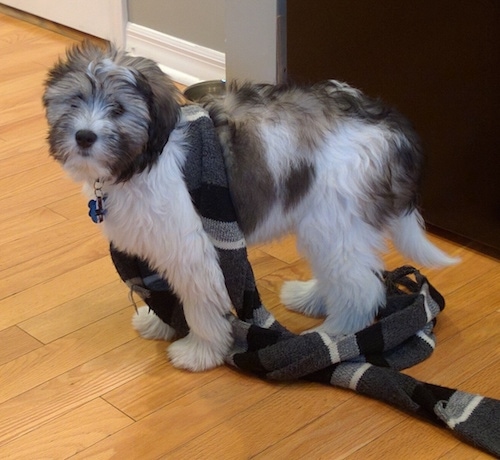
Oona the Polish Lowland Sheepdog puppy at 3 months old—"Oona is still learning the ways of the world."
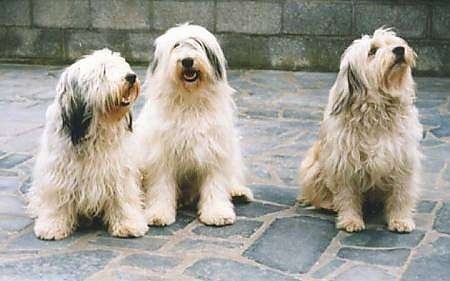
Photo courtesy of Gwiazda Sirius
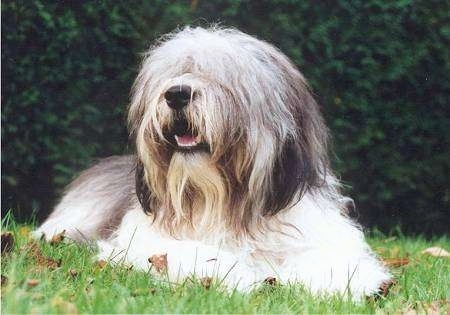
Photo courtesy of Van het Goralenhof
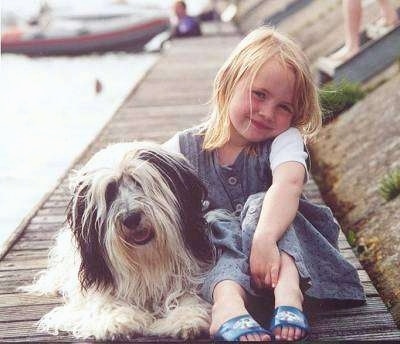
Photos courtesy of Van het Goralenhof
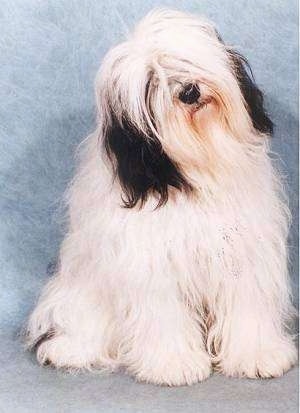
Photo courtesy of Van het Goralenhof
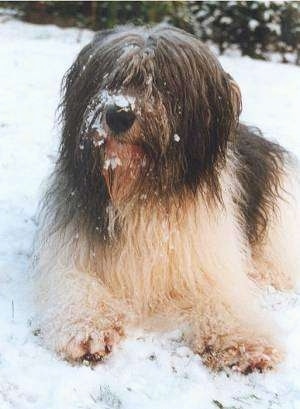
Photo courtesy of Van het Goralenhof
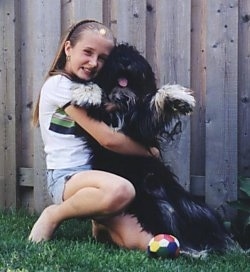
A purebred Polish Lowland Sheepdog.
A purebred Polish Lowland Sheepdog.